Media & Newsroom
Press resources, campaign information, and media assets for the 1,000 Voices for Cancer Equity™ campaign.
About the Campaign
1,000 Voices for Cancer Equity™ is a national listening campaign by United Colors of Cancer collecting the experiences, barriers, and triumphs of cancer patients, survivors, and caregivers across the United States — centering BIPOC and underserved communities while welcoming participants of every background. The campaign aims to collect 1,000 completed voices by December 31, 2026 to establish the first national benchmark of BIPOC cancer experiences, with World Cancer Research Day (September 24, 2026) serving as a national activation point. The confidential survey takes approximately 8–10 minutes, and the data will inform the inaugural State of BIPOC Cancer™ Report.
About United Colors of Cancer
United Colors of Cancer (UCC) is a 501(c)(3) nonprofit advancing cancer equity through community-driven data, advocacy, support programs, and innovative solutions.
From Survivor to Change Agent
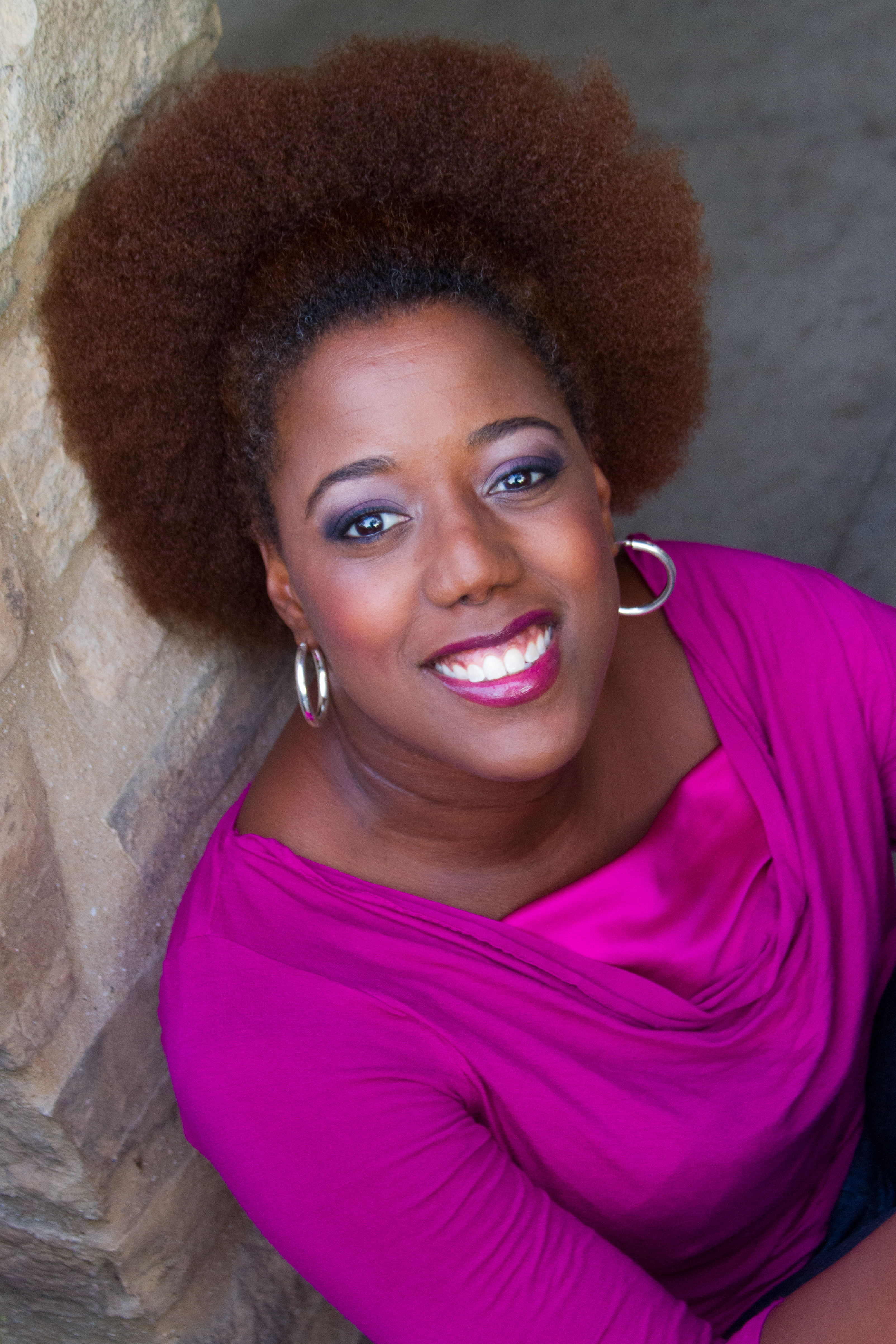
Bikira Radcliffe
Founder & Chief Empowerment Officer
I was the only one in the room who looked like me. I started United Colors of Cancer so no one has to feel invisible again.
Press Releases
Official press releases and campaign updates. Click any release to read the full text.
For Immediate Release · August 22, 2026
1,000 Voices for Cancer Equity™ Campaign Approaches Its First 100 Voices
United Colors of Cancer calls on patients, survivors, caregivers, community organizations, and media partners to help reach the campaign’s first major milestone
For Immediate Release · August 22, 2026
1,000 Voices for Cancer Equity™ Campaign Approaches Its First 100 Voices
United Colors of Cancer calls on patients, survivors, caregivers, community organizations, and media partners to help reach the campaign’s first major milestone
RIVERSIDE, Calif. — August 22, 2026 — Nearly 70 cancer patients, survivors, thrivers, and caregivers have already shared their experiences through the national 1,000 Voices for Cancer Equity™ Campaign. Now, United Colors of Cancer is calling on communities across the country to help the campaign reach its first major milestone: 100 completed surveys.
The campaign’s goal is to collect 1,000 completed voices by December 31, 2026, with World Cancer Research Day (September 24, 2026) serving as a national activation point. Reaching the first 100 responses established early momentum toward building a national, community-driven picture of how people experience cancer beyond what appears in their medical records.
“One hundred voices will not be the finish line, but it will show what is possible when people decide that lived experience belongs in the evidence,” said Bikira Radcliffe, Founder and Chief Empowerment Officer of United Colors of Cancer. “Every response helps us understand the barriers people face, the support they need, and the changes that could make cancer care more equitable.”
Approximately 30 More Voices Are Needed
United Colors of Cancer is asking the public to help close the remaining gap by completing the survey and sharing it directly with eligible participants.
The survey is intended for adults who have experienced cancer as:
- A person currently receiving treatment
- A cancer survivor or thriver
- A caregiver, family member, partner, or friend who has supported someone through cancer
The campaign intentionally centers BIPOC and underserved communities whose experiences have often been missing from cancer research and healthcare decision-making. However, the survey is open to people of every race, ethnicity, cancer type, stage, income level, and geographic region.
The confidential survey takes approximately 8–10 minutes and covers access to care, treatment barriers, financial hardship, emotional well-being, communication, trust, clinical trials, survivorship, and caregiver experiences.
Why the First 100 Voices Matter
Reaching 100 completed surveys will provide an important early foundation for identifying shared experiences and recurring barriers. Each response can help reveal:
- Why patients experience delays in diagnosis or treatment
- How insurance, transportation, income, disability, or geography affect access
- Whether patients feel heard, respected, and represented in their care
- How cancer affects families financially and emotionally
- What types of support make a meaningful difference
- Where information about clinical trials and other options may be missing
The findings will ultimately inform the inaugural State of BIPOC Cancer™ Report, which will translate community experiences into evidence that can support research, program development, advocacy, healthcare improvement, and policy discussions.
How the Public Can Help
United Colors of Cancer is asking individuals and organizations to take three immediate actions:
- Complete the survey if you are a cancer patient, survivor, thriver, or caregiver.
- Send the survey directly to at least three eligible people in your personal or professional network.
- Share the campaign through newsletters, social media, support groups, faith communities, healthcare organizations, workplaces, and community networks.
“Posting the survey once is not enough,” Radcliffe said. “The invitation often needs to come from someone a participant already knows and trusts. A personal text, email, or conversation can be the reason someone decides that their experience matters enough to share.”
Media and Community Partners Needed
Healthcare organizations, cancer nonprofits, universities, survivor-led groups, churches, businesses, cultural organizations, professional associations, and media outlets are encouraged to help amplify the campaign.
Media representatives may request interviews, campaign graphics, participant information, and additional background materials through the campaign newsroom.
About United Colors of Cancer
United Colors of Cancer is a 501(c)(3) nonprofit advancing cancer equity through community-driven data, advocacy, direct support programs, education, and innovative solutions. The organization works to ensure that the voices, experiences, and needs of BIPOC and underserved cancer communities are seen, heard, and represented in the decisions shaping cancer care.
For Immediate Release · August 1, 2026
United Colors of Cancer Launches National 1,000 Voices for Cancer Equity™ Campaign
National survey centers BIPOC and underserved cancer experiences while welcoming patients, survivors, and caregivers of every race and background
For Immediate Release · August 1, 2026
United Colors of Cancer Launches National 1,000 Voices for Cancer Equity™ Campaign
National survey centers BIPOC and underserved cancer experiences while welcoming patients, survivors, and caregivers of every race and background
RIVERSIDE, Calif. — August 1, 2026 — United Colors of Cancer (UCC) has launched 1,000 Voices for Cancer Equity™, a national listening campaign created to document the real experiences of cancer patients, survivors, thrivers, and caregivers across the United States.
The campaign centers Black, Indigenous, People of Color, and other underserved communities whose experiences have historically been underrepresented in cancer research and healthcare data. The survey is open to adults of every race and background who have experienced cancer as a patient, survivor, thriver, or caregiver.
United Colors of Cancer aims to collect 1,000 completed voices by December 31, 2026, with World Cancer Research Day (September 24, 2026) marking a national activation point for the campaign.
“Healthcare measures what happened. This campaign is designed to capture why it happened,” said Bikira Radcliffe, Founder and Chief Empowerment Officer of United Colors of Cancer. “Why was care delayed? Why did someone struggle to access a specialist or clinical trial? How did treatment affect a family financially and emotionally? What made a patient feel seen, respected, and supported? These experiences are data, and they deserve to help shape the future of cancer care.”
Turning Lived Experiences Into Evidence
The confidential online survey takes approximately 8–10 minutes and asks participants about:
- Access to cancer care and treatment
- Delays, barriers, and gaps in care
- Financial and emotional effects of cancer
- Communication and trust within healthcare
- Clinical trial awareness and access
- Support during treatment and survivorship
- Experiences that helped participants feel respected and supported
Participation is voluntary. Respondents may skip any question or stop the survey at any time. Findings will be analyzed and reported in aggregate.
The information collected will inform the inaugural State of BIPOC Cancer™ Report, a community-driven national benchmark intended to identify patterns, highlight inequities, elevate effective practices, and provide actionable insights for researchers, healthcare organizations, policymakers, funders, and community advocates.
“One person’s experience can be dismissed as an isolated incident,” Radcliffe said. “When 1,000 people share their experiences, patterns become visible—and those patterns can become a foundation for change.”
A National Coalition for Cancer Equity
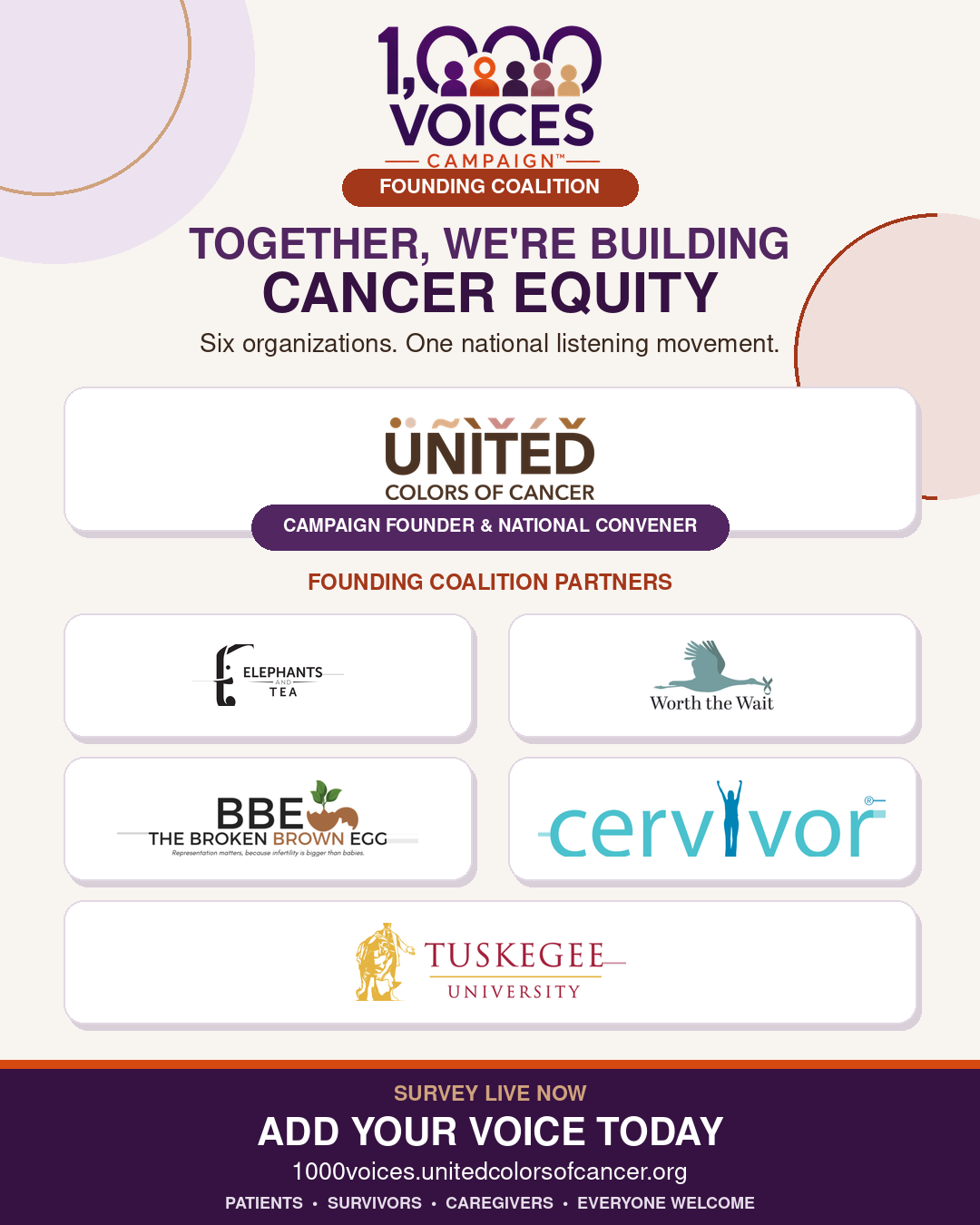
United Colors of Cancer serves as the campaign founder and national convener. The Founding Coalition includes:
- Tuskegee University — Founding Research Partner
- Cervivor — Founding Survivor Advocacy Partner
- The Broken Brown Egg — Founding Family Building Partner
- Worth the Wait — Founding Fertility and Survivorship Partner
- Elephants and Tea — Founding Adolescent and Young Adult Cancer Partner
The campaign is also inviting cancer organizations, hospitals, healthcare professionals, universities, faith communities, advocacy groups, community leaders, employers, and media organizations to help distribute the survey nationwide.
Who Can Participate?
The survey is open to adults in the United States who have experienced cancer as:
- A person currently receiving cancer treatment
- A cancer survivor or thriver
- A caregiver, family member, partner, or friend who has supported someone with cancer
Participation from all cancer types, stages, geographic regions, and backgrounds is encouraged.
About United Colors of Cancer
United Colors of Cancer is a 501(c)(3) nonprofit advancing cancer equity through community-driven data, advocacy, direct support programs, education, and innovative solutions. The organization works to ensure that the voices, experiences, and needs of BIPOC and underserved cancer communities are seen, heard, and represented in the decisions shaping cancer care.
Media Contact
For press inquiries, interview requests, and media partnerships, please reach out to the United Colors of Cancer communications team.
Downloadable Graphics
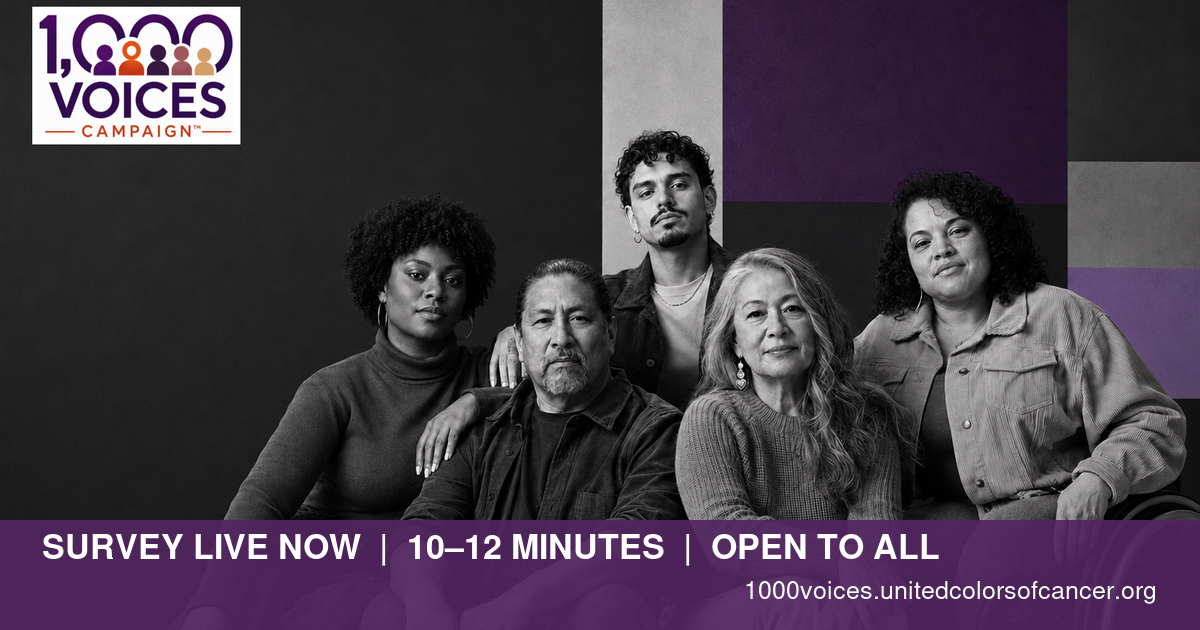
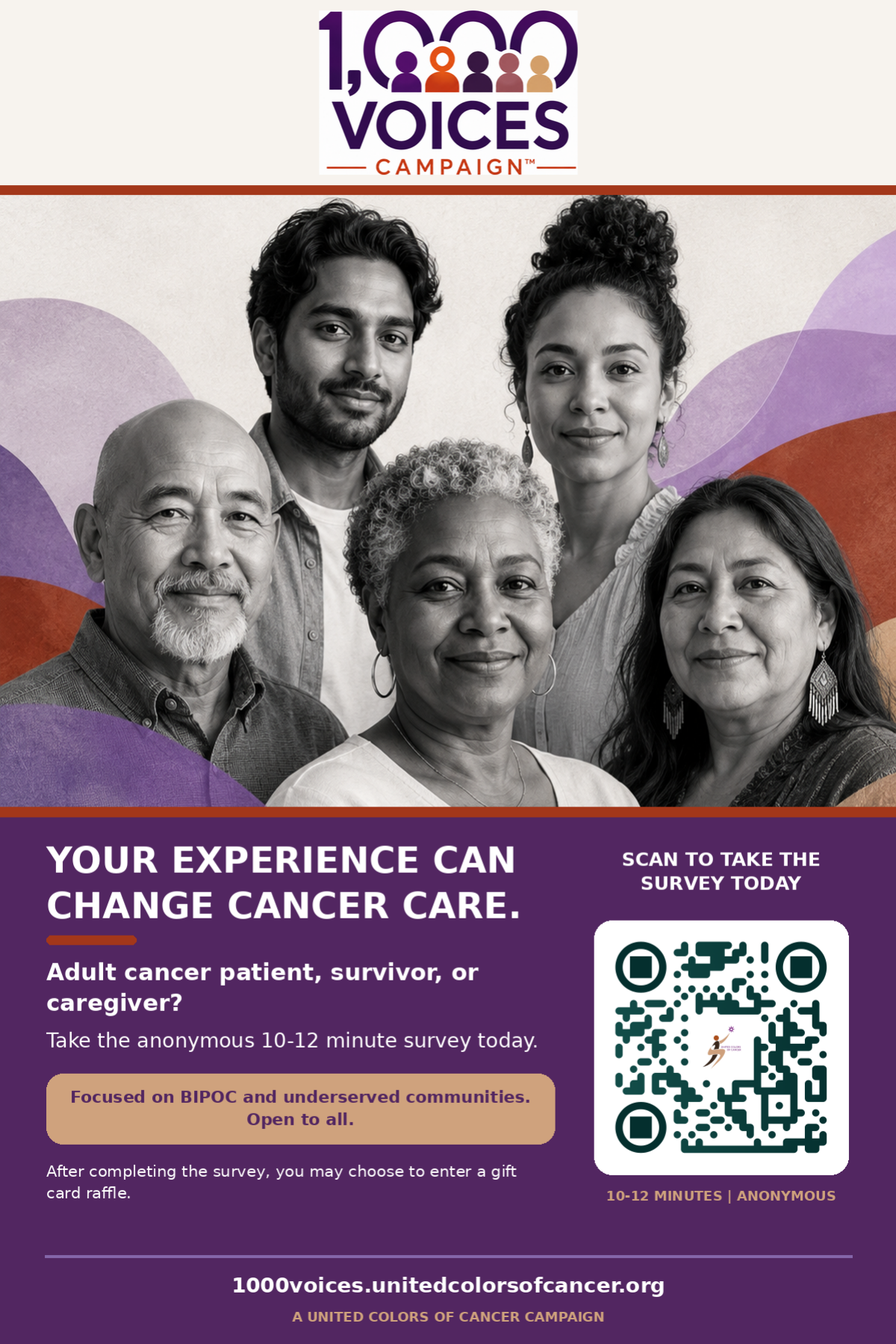
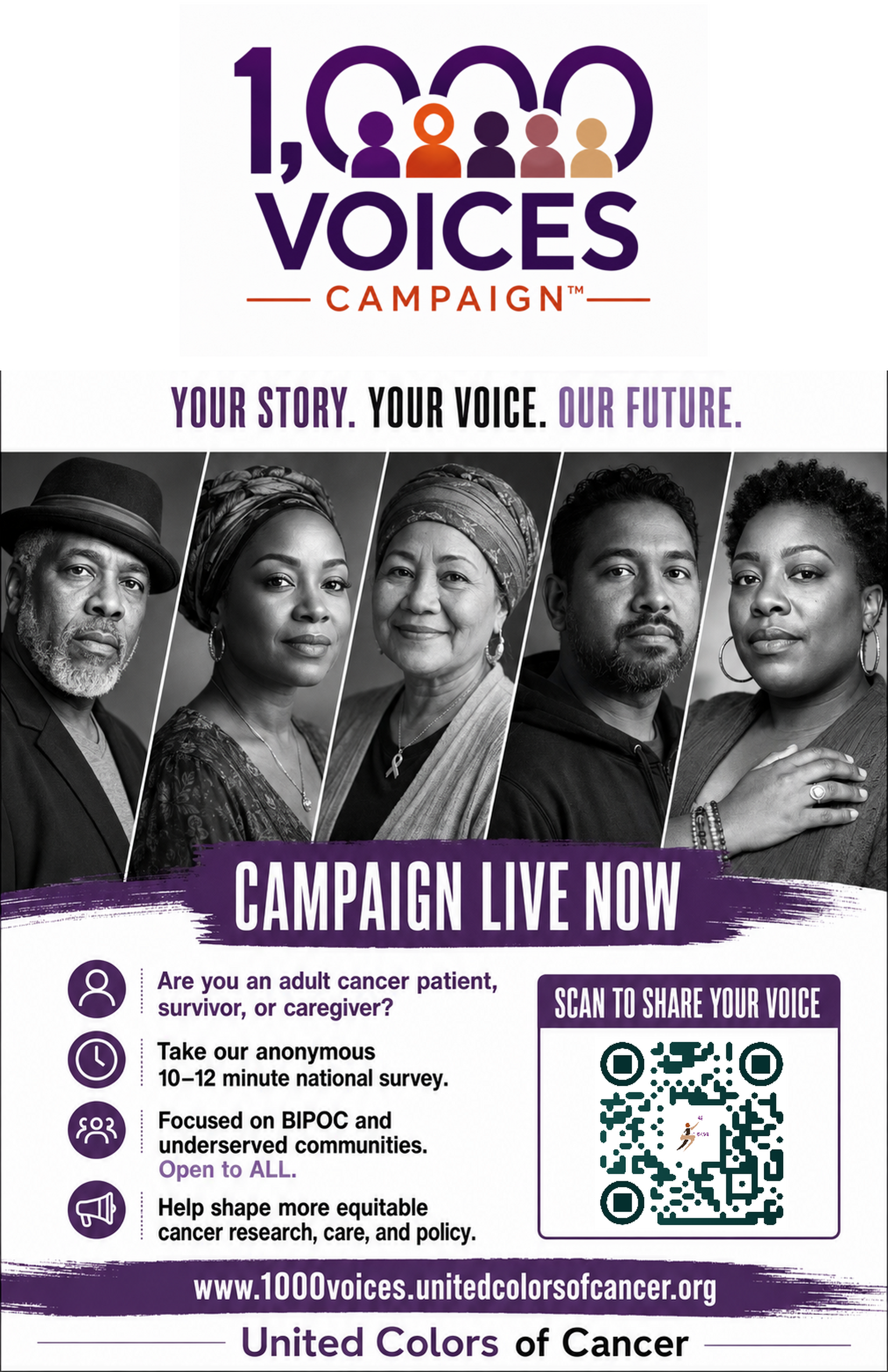
Campaign graphics, social media assets, and logo files for media use and partner promotion. Click any image to download.
Campaign Logo & QR Code
Social Media Graphics
Print Materials
Follow the Campaign
Follow United Colors of Cancer on social media for campaign updates, survivor stories, and ways to get involved.